
Clearly television holds a unique place in America's history. For the past sixty years Americans and their televisions have been in some sense inseparable. We can chart our changing history, tastes and values through a look at the programs we chose to embrace. No other cultural medium, no modern industry, no scientific discipline can claim as much power and influence over us as television. None can so completely represent us, both good and bad, to the rest of the world and none will so wholly represent the 20th century of America to the future.
In a country that acknowledges the cultural importance of baseball, cowgirls, and spies, honoring them with dedicated museums, where is the institution that joyfully celebrates this special connection between America and television? Not a small museum focused on quiet scholarship but an institution in size, scope and visitor experience that reflects television's significant impact on our world. A center serious about the complete scope of broadcast history, encouraging scholars and their research, but at the same time lively enough to be attractive for school children, their parents and their grandparents. A special place that commemorates our shared cultural heritage, offers stimulating educational programs, creative opportunities, and is a resource for rare, original materials. A place recognized as the national center for the study of American broadcasting.
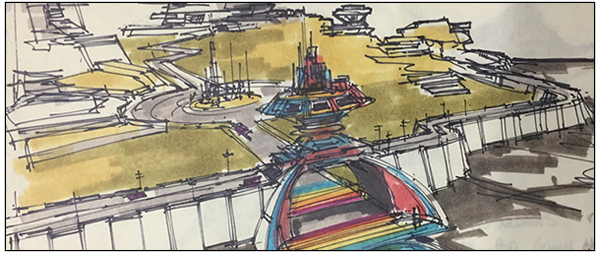
Since its inception my belief has been that the material held by The American Radio and Television Script Library offers critical insight not only into the history of broadcasting but into America's social history as well. My dream is that the Library would be the core of a larger research center dedicated to broadcasting. The center would house not only the Library and archives but possibly an interactive social history museum displaying production artifacts and telling the TV and radio story, a technology lab, a theater, and a state-of-the-art working studio to be used for teaching purposes and for the production of educational and experimental television programming. This Television and Radio Arts Education Center could potentially become that nationally recognized hub and a jewel for the community that supports it.
Radio reigned supreme for the first decades of the 20th Century. By the mid century, television took the lead and broadcasting successfully proved its worth for entertainment, news and educational purposes. Now we are at the close of television's first long era. What was a bright, new medium 65 years ago has grown into one of the strongest, most powerful influences in the world. Television is now on the brink of a new uncertain phase, being forced to share its dominion with the next innovative technology. There could be no more perfect time than now to recognize and honor the place broadcasting has held in the American story.
From acquisition to cataloguing to conservation to presentation, the costs of maintaining the library and museum are monumental. Add that to design refinement for the final destination of these TV treasures and one does not have to be the Professor from Gilligan's Island to see that the situation is precarious!
And please sign the guestbook with your email address!